Nationwide Grease Trap Management Services

Managing grease trap programs for multi-location food service operations to support compliance, prevent disruptions, and keep kitchens running properly.

Cleaning and Pumping

Scheduled service to remove buildup and maintain proper function.

Preventative Maintenance

Routine service planning to reduce emergency issues and extend equipment life.

Emergency Response

Rapid coordination to resolve backups, overflows, and urgent service needs.

Jetting and Drain Line Cleaning

Clearing blockages to maintain proper flow and prevent recurring issues.

Installation and Repair

Coordination of grease trap and interceptor installation and repair services.

Lift Station Services

Ongoing maintenance and service support for lift stations connected to grease systems.

Compliance and Reporting

Tracking service records, manifests, and local requirements to support compliance.

A Smarter Approach to Grease Trap & Used Cooking Oil Services

We manage the full lifecycle of your grease trap program, from scheduling and vendor coordination to compliance tracking and reporting. Our approach helps reduce the risk of blockages, prevent overflows, and maintain consistent service across all locations. Each program is built around your kitchen operations, service frequency requirements, and local regulations.
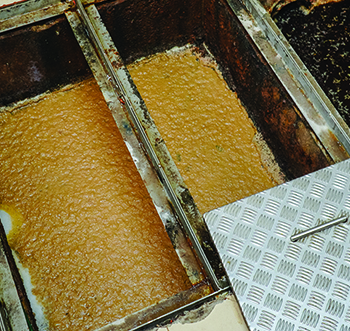
Nationwide grease trap management

Getting Started with SLM's Nationwide Grease Trap Management Services

Grease traps play a critical role in separating fats, oils, and grease from wastewater. Without proper maintenance, buildup can lead to backups, odors, and regulatory issues. SLM will build a grease trap program that supports compliance and keeps your kitchens operating without disruption. 

Common Questions

What is a grease trap and why is it important for commercial kitchens?

A grease trap is a device that captures fats, oils, and grease (FOG) from wastewater to prevent blockages in plumbing systems. It is essential for maintaining compliance with local regulations and ensuring the efficient operation of commercial kitchens.
Grease traps should be cleaned and maintained regularly, typically every 1-3 months, depending on the volume of FOG produced by the kitchen. Regular maintenance helps prevent clogs, backups, and overflows.
Signs that a grease trap needs servicing include slow drainage, foul odors, frequent backups, and visible grease accumulation. Regular inspections can help detect these issues early. 
Businesses can ensure compliance by regularly cleaning and maintaining grease traps, keeping detailed service records, and staying informed about local regulations. Partnering with a professional service provider can also help ensure compliance.
Proper grease trap maintenance prevents FOG from entering the sewer system, reducing the risk of water pollution and protecting local water bodies. It also helps prevent costly blockages and overflows.
There are several types of grease traps available, including gravity grease traps, automatic grease traps, and passive grease traps. The choice depends on the size and specific needs of the kitchen.
Cooking oil recycling involves collecting used oil and processing it into biodiesel or other products. Benefits include reducing waste, lowering disposal costs, and supporting sustainable energy initiatives.
Businesses should store used cooking oil in designated containers and arrange for regular pick-up by a certified recycling service like SLM. Proper disposal helps avoid environmental pollution and potential fine.
A comprehensive maintenance program includes regular cleaning, inspection, and repair of grease traps, as well as waste disposal, FOG separation, and compliance reporting.
Choosing a reputable provider ensures that services are performed correctly and efficiently, helping businesses stay compliant with regulations, avoid costly issues, and support environmental sustainability initiatives.